Good Things Happening Against Fast Fashion
The Bear on of Fast Fashion On the Environment
Introduction
Equally an individual strolls into a store and purchases a few items at the mall, a thought that may cantankerous our mind is how it is possible for such affordable wearable to be fabricated in mass quantities. Of course, the fast manner industry and its corresponding factories plant a way. Among the various issues regarding fast fashion and how its manufacture has been able to nail, the various destructive furnishings on the environment remain a major business. To manufacture wearing apparel, the fast fashion industry exports its production business overseas for cheap labor to avert the loftier minimum wages implemented past many developed governments. Even though typical consumers in the Northward American market may exist able to afford clothes for a cheaper price, fast fashion comes with a price tag with a handful of consequences. Thus, information technology falls upon us - the consumers - to explore alternatives to tackle the neglected environmental impact of such consumerism.
Excessive Usage of H2o
The fashion industry consumes one tenth of all of the h2o used industrially to run factories and clean products. To put this into perspective, it takes 10,000 liters of water to produce one kilogram of cotton wool or approximately 3,000 liters of h2o for one cotton shirt. Furthermore, material dyeing requires toxic chemicals that subsequently end up in our oceans. Approximately xx% of the wastewater worldwide is attributed to this process, which accumulates over time. Equally many factories moved overseas as stated previously, they may be in countries without strict environmental regulations, resulting in untreated water to enter the oceans. Regrettably, the wastewater created is extremely toxic and in many cases, cannot be treated to become safe once more.
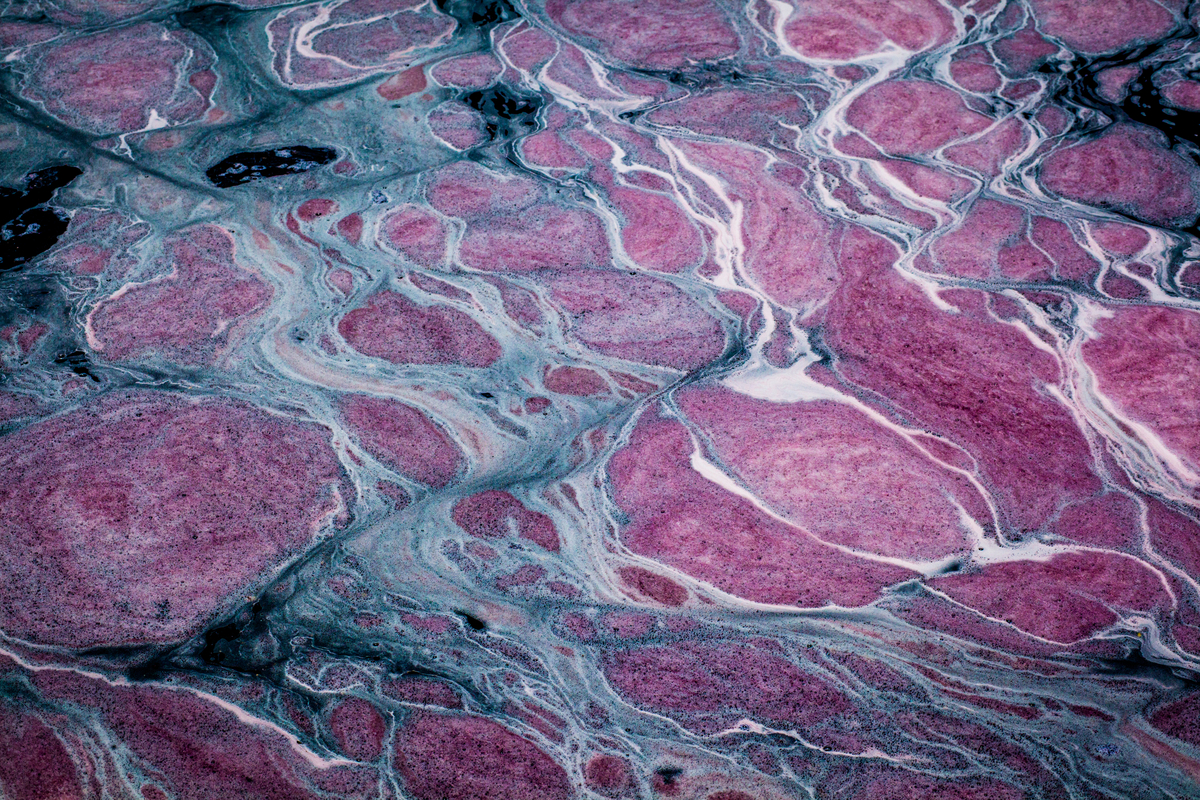
Image of dyes dumped in ocean waters by fast manner factories from Greenpeace.
Plastic Microfibers
Adjacent, synthetic materials are the main culprits that cause plastic microfibers to enter our oceans. To be exact, approximately 35% of all microplastics are from these synthetic materials. To further lower the price, producers turn to materials that may exist of depression quality. For instance, many of the fibers are made of polyester, consisting of plastic and tend to release far more than carbon emissions than cotton. Furthermore, plastic is tiresome to degrade in the body of water until a long time has passed. When plastic finally breaks down, it creates a toxic substance with a harmful impact on the marine ecosystems. As these plastic microfibers cannot exist removed, they finish up in the human nutrient chain through aquatic life, causing many negative health effects. There are a diverseness of ways they can enter our sea - about commonly from our usage of the washing auto. Though it is axiomatic that the washing machine has been an essential apparatus in our households, information technology'due south important to wash full-loads when possible to minimize excess consumption of water.
Excessive Consumption of Clothing
Due to how affordable the clothing is and how new trends convince consumers to seek out more, the value of clothes may diminish in the eyes of consumers. Every bit of 2019, the electric current report shows that 62 one thousand thousand metric tons of apparel were consumed globally. Over time, the amount that our gild has consumed has skyrocketed in recent decades. Although it may be beneficial to our economy, more items tend to stop up at the landfills because the lower quality clothes are worn out merely after a few washes and this demands for more than new clothes. Amid a variety of bug present, the two main concerns involve piles of clothing in landfills and incinerated clothing. Whether it is simply growing out of the clothes or that the dress are no longer in style, a significant proportion of the population opts to throw abroad their dress instead of altruistic them. Additionally, due to the number of cut outs for the wearable, a large amount of materials are beingness wasted every bit they cannot be used any further for one certain type of production. 57% of all discarded wearable ends upwards in landfill; the landfills start to pile up, so the trash is moved to an area to be incinerated. This procedure poses multiple public wellness and environmental dangers to the people who live in nearby communities as toxic substances or large amounts of poisonous gases are released equally a result of called-for landfill. Despite new technology creating filters to capture the pollutants, they remain nowadays and often are turned into a dangerous substance, which later returns back to the landfills and pollutes our air.
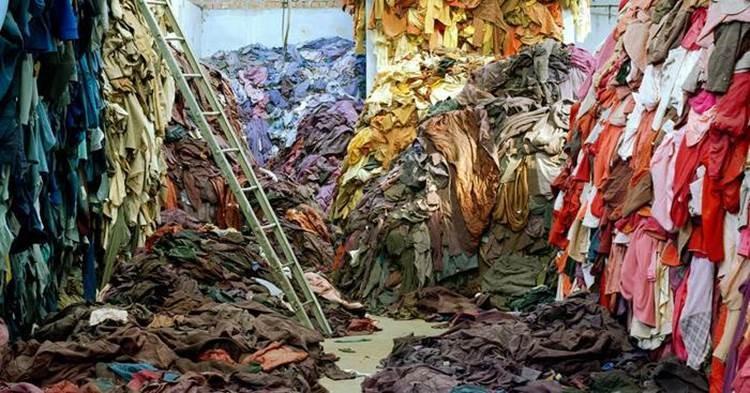
Prototype of a landfill with mountains of clothes due to fast fashion from the Academy of Queensland.
Usage of Viscose
From the outset of cellulosics, viscose was introduced in 1890 as a cheaper alternative to cotton wool for production. Viscose, besides known as rayon, is a common cellulosic fiber fabricated from wood pulp. It has extremely detrimental effects on the environment such equally the usage of harmful chemicals and the unethical resourcing for the material. As the companies apply toxic chemicals, others are worried almost other impacts beyond environmental factors For case, the carbon disulphide that is used in viscose fiber product leads to lethal health side effects on workers too. Thus, maybe it is not surprising that viscose consequently results in a larger corporeality of greenhouse gas emissions than cotton product.
An Alternative to Viscose
Instead of using viscose, there are alternatives that we can opt for such as more sustainable cellulosic fibers. In Finland, a company named Spinnova has transformed forest fibers into recyclable fibers without harmful chemicals such as caustic soda, carbon disulphide, and sodium hydroxide that are commonly establish in viscose. Inspired from the web-weaving by spiders, the method is applied with forest fiber material. It reportedly uses 99% less water than cotton product. The method is especially promising considering it is far safer, uses less resource, and provides support that sourcing sustainably is not impossible for many other companies. With a growing business organization amid the general population, many start-ups have taken on the challenge of sourcing cellulosics from a myriad of other sources such as orange, milk and java. For case, modal from the 1950s and lyocell from the 1970s are both revolutionary by being biodegradable, using less fiber, less dye and better for moisture absorption or moisture-wicking than many other fibers. As a result, they accept grown in popularity with consumers and a vast amount of companies nowadays. Though the issue of sustainability is evident, there have been a multifariousness of innovations over time that are moving the industry in the correct direction. Equally the move gains momentum, we have the ability to brand a significant change. Past supporting companies such as Spinnova, we actively are building towards a cleaner and greener future, one step at a fourth dimension.

The process of how Spinnova sources their sustainable cellulosic fibers from Spinnova.
Decision
The style industry is currently responsible for more annual carbon emissions than all international flights and maritime aircraft combined. If the industry maintains its class, an increase of 50% in greenhouse gas emissions is expected within a decade. Past analyzing the root causes of the problem, the next steps are easier to understand as we can connect the dots and create solutions. A few possible solutions were listed in the article, but some others include mindful purchasing of fast fashion brands and supporting reform. If you are not entirely sure of which brands to support, you are not alone. Doing background inquiry on brands earlier purchasing clothes can assistance you get a more than informed consumer and steer your purchases in a style that aligns with your environmental values. The fashion manufacture has caused a substantial amount of damage to our environment. Withal, if nosotros beginning to take proactive steps towards advocating for a green-friendly fashion industry and becoming an environmentally-conscious consumer, nosotros tin can finally slow down climatic change.
0 Response to "Good Things Happening Against Fast Fashion"
Post a Comment